Invited Speakers
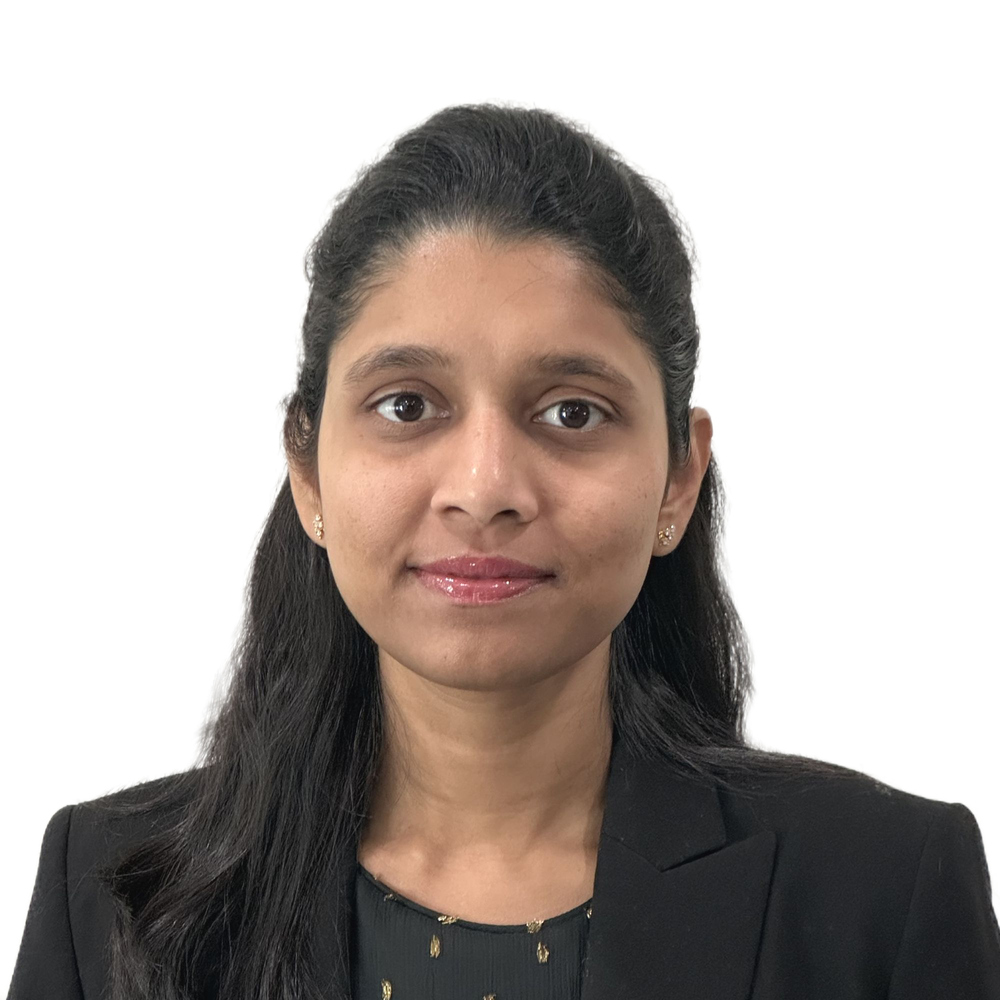
  • Prof. Omer Rana
    Professor of Performance Engineering in the School of Computer Science & Informatics at Cardiff University, UK
    Omer Rana is Professor of Performance Engineering in the School of Computer Science & Informatics at Cardiff University, UK. His research spans distributed systems, edge and cloud computing, and the application of these across the computing continuum, with a particular focus on how these technologies can be deployed in resource-constrained environments. He has led and contributed to a range of projects applying edge computing, IoT and federated learning to real-world domains including precision agriculture, environmental monitoring and at the interface of energy and transport systems (e.g. for electrified transport). His current interests include serverless architectures for federated learning, the fusion of geo-spatial data sets in sustainable transport, and the design of tools that make such data interpretable and actionable for non-technical users. Much of this work is pursued through international collaborations spanning the UK, Australia, New Zealand the USA and Southeast Asia.

    More details can be found at:
    https://profiles.cardiff.ac.uk/staff/ranaof

    KeyNote: Edge Computing and Rural AI

    Agriculture worldwide is increasingly practised under uncertainty — erratic rainfall, intensifying heat and water scarcity — much of it on smallholdings in remote, low-power, low-connectivity settings where reliable data network and Cloud computing hosted services access cannot be assumed. This talk argues that resilience in such environments depends on a combination of technology and people, built around an IoT–edge–cloud continuum (often referred to as the "computing continuum") in which as much processing as possible happens on the farm itself.

    Drawing on our work in Rural AI, this talk will discuss how inexpensive field-side units (single-board computers, low-power sensor nodes and cameras) capture soil, microclimate, weather and images (hyperspectral & thermal cameras), and run analytics locally so that actionable results reach the farmer without continuous connectivity. Using a cross-farm weed-detection example, we show how federated learning over a serverless computing continuum offers a valuable middle ground between cloud-only and edge-only approaches: each farm builds a local model, shares only the model rather than raw data, and contributes to an aggregated model that outperforms any single site while preserving data sovereignty and tolerating intermittent participation. Understanding how federated learning approaches can be utilised in such resource constrained environments also provides opportunities for use in other areas.

    We also describe ForestPulse, a configurable "forest health" composite-index platform that fuses heterogeneous datasets into an interpretable, site-specific health score for a forest area, with per-indicator visualisations. Its built-in rated feedback makes it a natural mechanism for engaging farmers and field workers — addressing the reluctance to share data and the governance and adoption challenges that ultimately determine whether such decision support tools succeed. The ForestPulse project involves collaboration with the Danau Girang Field Centre (DGFC) in Malaysia.

    More details about the RuralAI project:
    https://sites.google.com/view/rural-ai/home?pli=1

    Danau Girang Field Centre:
    https://www.cardiff.ac.uk/danau-girang-field-centre
    and
    https://www.danaugirang.com.my/

    ForestPulse: https://iotgarage.net/projects/ForestHealthIndex

    UK National Edge AI Hub:
    https://edgeaihub.co.uk/
  • Prof. Shehzad Ashraf Ch.
    Professor of Cybersecurity Engineering, Abu Dhabi University, UAE; Department of Software Engineering, Nisantasi University, Istanbul, Türkiye
    Senior Member, IEEE; Top 2% of Computer Scientists Globally (2020–2025)
    Shehzad Ashraf Chaudhry (Senior Member, IEEE) is working as a professor of cybersecurity engineering at the Department of Computer Science and Information Technology, College of Engineering, Abu Dhabi University, United Arab Emirates and also with the Department of Software Engineering, Nisantasi University, Istanbul, Turkey. Prof. Chaudhry received the master’s and Ph.D. degrees (with Distinction) from the International Islamic University Islamabad, Pakistan, in 2009 and 2016, respectively. He was a recipient of the Gold Medal for achieving 4.0/4.0 CGPA in his Masters. Prof. Chaudhry has authored over 230 scientific publications in international journals and conference proceedings, including more than 180 papers indexed in Web of Science journals. He is a leading researcher in Cybersecurity and his research has been featured in leading journals and conferences, including IEEE Magazines, IEEE Transactions, IEEE Journals, ACM Transactions, Elsevier and Springer Journals. He is the inventor of two patents, with additional patent applications currently filed. With an H-index of 57, an i10-index of 144, and an accumulated impact factor exceeding 700, Prof. Chaudhry’s work has been cited over 9000 times. He has supervised over 40 graduate students, guiding them in advanced research across diverse areas. His current research interests include lightweight cryptography, elliptic curve cryptography, multimedia security, e-payment systems, MANETs, SIP authentication, smart grid security, IoT and cloud infrastructure security, and next-generation networks. Prof. Chaudhry has delivered numerous keynote speeches, moderated and participated in several panel discussions, and received multiple awards for best research papers.
    Over the several years, Prof. Chaudhry has been recognized among the world’s leading computer scientists by Research.com and has also been listed among the rising stars of computer science. From 2020 to 2025, he has consistently ranked among the top 2% of computer scientists globally, according to Stanford University’s annual report. In recognition of his research contributions, the Pakistan Council for Science and Technology awarded him the prestigious Research Productivity Award, affirming his position among the most productive computer scientists in Pakistan.
  • Prof. Muhammad Bilal
    Associate Professor, School of Computing and Communications, Lancaster University, UK
    Co-Editor-in-Chief, International Journal of Smart Vehicles and Smart Transportation
    Muhammad Bilal (SM'20) received the Ph.D. degree in information and communication network engineering from the School of Electronics and Telecommunications Research Institute (ETRI), Korea University of Science and Technology, in 2017. From 2017 to 2018, he was at Korea University, where he served as a Postdoctoral Research Fellow at the Smart Quantum Communication Center. In 2018, he joined Hankuk University of Foreign Studies in South Korea, where he served as an Associate Professor in the Division of Computer and Electronic Systems Engineering. In 2023, Dr. Bilal joined Lancaster University as a Senior Lecturer (Associate Professor) in the School of Computing and Communications. Dr. Bilal has been actively involved in various research projects, including projects funded by the EU Horizon, the Korean Government Institute for Information & Communications Technology Promotion (IITP), the Ministry of Trade, Industry & Energy (MOTIE) Korea, the BK21 program, the National Research Foundation of Korea (NRF), and the National Science Foundation of China.

    Dr. Bilal is a prolific author, known for his wide-ranging contributions to numerous articles published in top-tier journals and conferences. His pioneering work has also led to the successful acquisition of multiple US and Korean patents. His research interests include Network Optimization, Cyber Security, the Internet of Things, Vehicular Networks, Information-Centric Networking, Artificial Intelligence, and Cloud/Fog Computing.

    Dr. Bilal is a member of the editorial boards for several prominent journals, including IEEE TRANSACTIONS ON INTELLIGENT TRANSPORTATION SYSTEMS, IEEE INTERNET OF THINGS JOURNAL, IEEE Future Directions in Technology, Policy, and Ethics Newsletter, Alexandria Engineering Journal (Elsevier), and Physical Communication (Elsevier). He also serves as the Co-Editor-in-Chief of the International Journal of Smart Vehicles and Smart Transportation. In addition, he has served as a Technical Program Committee member for leading international conferences, including the IEEE Vehicular Technology Conference (VTC), the IEEE International Conference on Communications (ICC), ACM SigCom, and the IEEE Consumer Communications & Networking Conference (CCNC).

    Area of Interest: Internet of Things, Edge Computing, Cryptology, Machine Learning, Artificial Intelligence.
  • Dr. Bharat Bhushan
    Associate Professor, Department of Computer Science and Engineering, School of Engineering and Technology, Sharda University, India
    Senior Member, IEEE; Top 2% Scientist Globally (Stanford, 2021–2023)
    Dr. Bharat Bhushan is an accomplished academic and researcher in computer science and engineering, currently an Associate Professor in the Department of Computer Science and Engineering (CSE) at the School of Engineering and Technology, Sharda University, Greater Noida, India. With a strong foundation in information security and emerging technologies, he has made significant contributions across wireless sensor networks, the Internet of Things (IoT), blockchain, and cybersecurity.
    Born and raised in India, Dr. Bhushan completed his higher education in computer science. He earned his Bachelor of Technology (B.Tech) in Computer Science and Engineering with distinction from Sam Higginbottom University of Agriculture, Technology and Sciences (formerly Allahabad Agricultural Institute) in 2012. He continued his studies at the prestigious Birla Institute of Technology (BIT), Mesra, where he completed a Master of Technology (M.Tech) in Information Security with distinction in 2015, followed by a Doctorate (Ph.D.) in Computer Science and Engineering in 2021. His academic journey is complemented by international certifications, including CCNA, MCTS, MCITP, RHCE, and CCNP, which underscore his expertise in networking and IT infrastructure.

    Dr. Bhushan's career blends industry experience with academia. He worked as a Network Engineer at HCL Infosystems Ltd., Noida, from August 2012 to May 2013, gaining practical experience in IT services and networking. Transitioning to education, he served as an Assistant Professor at HMR Institute of Technology and Management, Delhi, from July 2015, before joining Sharda University in a similar role and was eventually promoted to Associate Professor. With over 7.5 years of teaching experience and 1 year in industry, he has mentored students and contributed to CSE curriculum development.

    Dr. Bhushan's research primarily revolves around Wireless Sensor Networks (WSNs), IoT, Blockchain Technology, Cloud Computing, Cyber Security, and Network Security. He has published more than 150 research papers in prestigious SCI-indexed journals, including the Journal of Network and Computer Applications (Elsevier), Wireless Networks (Springer), and Sustainable Cities and Society (Elsevier). Additionally, he has authored over 50 book chapters and edited 30 books with renowned publishers like Elsevier, Springer, Wiley, and CRC Press. He serves as a series editor for two Scopus-indexed book series: Computational Methods for Industrial Applications (CMIA) and Future Generation Information System (FGIS), both from CRC Press.

    His scholarly impact is evident in his Google Scholar metrics: over 8,370 citations, an h-index of 49, and an i10-index of 128. On ResearchGate, he has 213 publications with 5,586 citations and an h-index aligned with his prolific output. Notable publications include "Blockchain for Smart Cities: A Review of Architectures, Integration Trends and Future Research Directions" (479 citations), "Conceptualizing Smart City Applications: Requirements, Architecture, Security Issues, and Emerging Trends" (378 citations), and "Unification of Blockchain and Internet of Things (BIoT): Requirements, Working Model, Challenges and Future Directions" (359 citations).
    Dr. Bhushan has received numerous accolades, including being ranked in the top 2% of scientists worldwide by Stanford University for 2021, 2022, and 2023. He was honored as a Top Cited Author by Wiley (2022-2023) and received the Young Researcher Award (Under 40) from the International Academic and Research Excellence Award in 2019. His leadership roles include serving as Program Chair for international workshops like BDNT 2021 in Belgium and BDBI 2021 in Poland.
    An active participant in the global academic community, Dr. Bhushan has delivered keynote addresses and conducted faculty development programs in India, Iraq, Morocco, China, Belgium, and Bangladesh. He is a reviewer and editorial board member for several international journals and a Senior Member of IEEE, and is a member of IAENG, CSTA, SCIEI, IAE, and UACEE. His expertise extends to session chairing and resource talks at conferences, fostering innovation in computing technologies.

    Dr. Bharat Bhushan continues to inspire through his dedication to research, education, and technological advancement, positioning himself as a key figure in India's academic landscape.

  • Dr. Abdul Razaque
    Department of Computer Science and Information Sciences, Arkansas Tech University Russellville, AR, USA
    Senior Member, IEEE; Former Editor-in-Chief, International Journal for Engineering and Technology
    Abdul Razaque (Senior Member, IEEE) received the Ph.D. degree in computer science and engineering from the University of Bridgeport, USA, in 2015. He is currently an Assistant Professor of Computer and Information Science at Arkansas Tech University, USA. He has held faculty and research positions with esteemed institutions, including Ohio Northern University (USA), New York Institute of Technology (NYIT), Satbayev University, the International Information Technology University (IITU), and the School of Computing at Gachon University, South Korea. He is known for his dynamic teaching style that emphasizes experiential learning, critical thinking, and clear communication of complex technical concepts. He has successfully led and collaborated on several research projects, securing more than $6 million in funding.

    Beyond his scholarly contributions, he has mentored students from undergraduate to Ph.D. levels and played a central role in curriculum development, international academic partnerships, and research innovation. He served as Editor-in-Chief of the International Journal for Engineering and Technology (IJET), Singapore, from 2012 to 2015, and continues to serve as an editor, associate editor, and editorial board member for several international journals. He has chaired numerous international conferences and delivered keynote lectures worldwide. His academic leadership, extensive research output, and dedication to teaching make him a distinguished contributor to the global scientific and educational community.

    He has published more than 200 peer-reviewed articles and four books, with citations on Google Scholar exceeding 5,000. His recent work spans blockchain-enabled systems for smart grids and academic-integrity verification, and project management frameworks for smart city development. His broader research covers cybersecurity, artificial intelligence, blockchain technology, cloud computing, wireless sensor networks, the Internet of Things, and intelligent systems.
  • Dr K K Singh
    Dean-School of Computing and Data Science, SAI University Chennai, India
    Senior Member, IEEE; World’s Top 2% Scientist; Senior Editor, IEEE Access; Associate Editor, IEEE Transactions on Computational Social Systems
    Dr. K.K. Singh has more than 21 years of experience in teaching and research and has worked across the domain including Artificial Intelligence, Machine Learning, Deep Learning, Digital Image Processing, Data Analytics, Natural Language Processing, and Visual Computing. Dr. Singh has done PhD from IIT Roorkee . He also holds a Master of Science in Artificial Intelligence and Machine Learning from Liverpool John Moores University, United Kingdom, and a Post Graduate Diploma in Machine Learning & Artificial Intelligence from IIIT Bangalore.

    He has received laurels as World’s Top 2% Scientists, the CV Raman Award for Best Researcher, and the IEEE Outstanding Branch Counselor Award (Delhi Section). He is also a Senior Member of IEEE and actively contributes to the global research community. published over 200 research papers, including 70+ SCIE-indexed publications, with an h-index of 38 and more than 5000 citations.


    He holds multiple national and international patents and has authored and edited several books in emerging areas such as Artificial Intelligence, Blockchain, Federated Learning, and Generative AI with leading publishers including Elsevier, Springer, and Wiley. He actively contributes to the scholarly publishing ecosystem and serves in editorial roles for several reputed journals, including Senior Editor of IEEE Access, Associate Editor of IEEE Transactions on Computational Social Systems, and Editorial Board Member of Applied Computing and Geosciences, along with guest editorships for multiple international journals.
  • Prof. Muazzam Ali Khan Khattak
    Director, Farabi Research Center for Artificial Intelligence & Cybersecurity; Member, NADRA Authority Board
    Senior Member, IEEE (SMIEEE), AAAI Member, Pakistan Academy of Sciences (PAS) Fellow, AIR Network (AIR Net)
    Keynote talk:AI Based Smart Tutoring System For ADHD and ASD students

    Prof. Dr. Muazzam Ali Khan Khattak (SM IEEE, AAAI, PAS, AIR Net) is currently serving as Director Farabi Research Center for Artificial Intelligence & Cybersecurity as well as Member NADRA Authority Board. He has been listed among the top 2% most highly cited scientists worldwide in 2024 and 2025 and recipient of Gold Medals from the Pakistan Academy of Sciences, COMSTECH, QAU Best Researcher award and Gold Medal from the IEEE Islamabad Section. He has an additional charge of Director of the ICESCO Chair in Data Analytics and Edge Computing and Director of Science & Technology at Quaid-i-Azam University, Islamabad. Prof Khattak is also chairperson of UNESCO National IFAP Committee, Pakistan. Earlier, he served as Associate Dean of Computing and Head of the Postgraduate Program at SEECS, NUST. He completed his PhD in a sandwich program between IIUI and University of Missouri, (UMKC), USA, followed by a postdoctoral fellowship at University of Missouri, USA. Later he joined UMKC as an adjunct professor. Prof. Khattak has authored 03 books and 16 book chapters with leading international publishers, in addition to more than 245 articles in reputed international journals and conferences. His work has earned him recognition as one of the world’s highly cited scientists, with over 7500 citations and an h-index of 46. He is also an elected member of Turkish Academy of Science and Technology (TUBA). His research focuses on Artificial Intelligence based smart solutions for Internet of Things, Internet of Vehicles, Smart Cities, and Information Security. He also holds adjunct professorships at the University of Missouri (USA), Texas American Muslim Universities (USA), Harbin Institute of Technology (China), USAK University (Türkiye), BAKU State University (Azerbaijan), and Margullan University (Kazakhstan). He has been honored with the Pak Academy of Sciences Gold Medal, the Best Performance Award by the Ministry of Education in 2023, and multiple performance-based awards at NUST and QAU from 2015 till 2025, as well 02 best papers awards at International conferences. He has also been nominated for the prestigious civil awards Tamgha-e-Imtiaz and Sitara-e-Imtiaz. Over the course of his career, he has secured national and international research grants amounting to Rs. 1.7 billion from institutions including the Ministry of Education (Kazakhstan), the British Council, the University of Missouri (USA), USAK University (Türkiye), and Margullan University (Kazakhstan). Prof. Khattak serves on international advisory boards at TEXAM (USA), USAK University (Türkiye), Baku State University (Azerbaijan), Harbin Institute of Technology (China) and International Research Network on AI Development and Governance (AIR Net), China. He is also member Senate/BOG at Mirpur University of Science and Technology, AJK and Islamabad University of Health Sciences and Emerging Technologies, Islamabad.

  • Dr. Dinesh Goyal
    Principal & Director, Poornima Institute of Engineering & Technology (PIET); Provost (I/C), Poornima University
    Senior Member, IEEE; Fellow Member, IETE; Member, ACM; Life Member, CSI & ISTE
    Dr. Dinesh Goyal is an eminent academic leader, researcher, and administrator with over 26 years of experience in higher education. He currently serves as the Principal & Director of Poornima Institute of Engineering & Technology (PIET) and as Provost (I/C) at Poornima University. Under his strategic vision, PIET achieved UGC Autonomous status and secured a NAAC 'A' Grade accreditation. A certified holder of the CMI Level 5 Award in Management and Leadership from Dudley College, UK (under the AICTE-UKIERI program), Dr. Goyal has served as an empaneled NAAC Assessor and Peer Team Chairman since 2021. He has pioneered significant infrastructure and academic initiatives, including heading a INR 1.26 Crore AICTE IDEA Lab project, establishing a Deep Learning Lab under AICTE MODROBS, and launching B.Tech programs in emerging domains as well as regional languages under the New Education Policy (NEP).

    As an active researcher specializing in Information & Network Security, Image Processing, Data Analytics, and Cloud Computing, Dr. Goyal has secured more than INR 81 Lakhs in research and development funding from prominent bodies like AICTE, TEQIP, and ISTE. His extensive scholarly portfolio features over 240 total publications, including 150 SCI/Scopus/Web of Science indexed journal and conference papers, accumulating 1,301 citations with an h-index of 18 and an i10-index of 35. His contributions to intellectual property and publishing include 2 granted patents (Vitro Virtual Trial Room and Smart Job First Dynamic Round Robin Simulator), 47 published patents, 1 copyright, 17 edited books with international publishers like Wiley, Springer, and IGI Global, 13 edited conference proceedings, and 16 special journal issues. He is editor-in-Chief for Journal of Computational Mathematics, Intelligent and Secure Systems. He has delivered addresses in various Institutions across globe in countries like China, Germany, Spain, France etc.

    Beyond research and administration, Dr. Goyal is a dedicated mentor who has successfully guided 22+ Ph.D. scholars (9 as primary supervisor and 13 as co-supervisor) alongside 30+ PG scholars. Recognized for his contributions to technical education, he received the Elets Excellence Award (2017) from the Higher Education Department, Government of Rajasthan. He maintains high professional standing as a Senior Member of IEEE, Fellow Member of IETE, Member of ACM, and Life Member of CSI and ISTE. He has organized over 25 international conferences and delivered more than 35 invited talks across various prestigious academic institutions and forums.

Invited Speakers

Industry Track

Operators, researchers and policy leads shaping the next decade of applied AI — in conversation on stage.